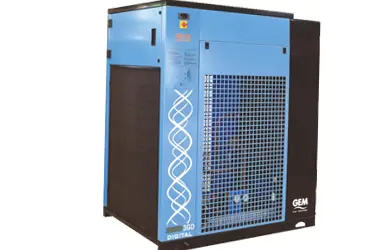
Desiccant Air Dryer
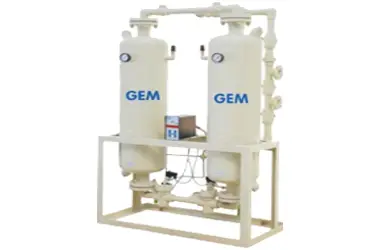
A Desiccant Air Dryer is an industrial drying system that removes moisture from compressed air using adsorption technology, achieving very low dew points required in sensitive applications. It is essential where even trace moisture can damage equipment, affect product quality, or disrupt processes.
Maharani Industrial Equipments Private Limited supports Desiccant Air Dryer systems from its Delhi base with pan India supply, along with in house manufacturing of cooling components, spare parts support, and repair services. The company operates as a complete compressor lifecycle support system rather than a product only supplier.
In real plant conditions, moisture is not just water. It leads to corrosion, instrument failure, and production defects that are often noticed only after damage is already done.
What is Desiccant Air Dryer
A Desiccant Air Dryer is a system that uses moisture absorbing materials such as activated alumina or silica gel to remove water vapor from compressed air, achieving very low dew points compared to refrigerated dryers.
In industrial use, it operates in twin tower configuration where one tower dries the air while the other regenerates the desiccant. This continuous cycle ensures uninterrupted dry air supply. It is commonly used in applications where even minimal moisture can lead to equipment malfunction or product rejection.
Applications in Real Industrial Use
A Desiccant Air Dryer is used where compressed air must remain completely dry.
Typical real world scenarios include:
- Instrument air systems where moisture can damage control valves
- Pharmaceutical manufacturing where contamination risks must be controlled
- Electronics production where moisture affects circuit integrity
- Paint and coating lines requiring moisture free air
- Chemical plants handling moisture sensitive reactions
In such environments, even a small amount of moisture can lead to production rejection or system failure, making drying critical.
Industries Using Desiccant Air Dryer
Industries that cannot tolerate moisture rely on desiccant drying systems.
- Pharmaceutical industry for clean and dry process air
- Electronics manufacturing where humidity affects components
- Food and beverage processing for contamination control
- Chemical industry for moisture sensitive processes
- Automotive painting lines requiring defect free finishing
- Instrumentation and control systems in refineries
- Textile industry for specialized applications
In these industries, moisture related failures often result in batch rejection or system shutdown.
Technical Considerations and Performance Factors
Performance of a Desiccant Air Dryer depends on operating conditions and system design.
Key factors include:
- Required dew point level based on application
- Air flow capacity and peak demand
- Regeneration method heatless or heated
- Pressure drop across the dryer
- Quality of desiccant material
- Ambient conditions affecting performance
In many plants, dryers fail to deliver expected results because dew point requirements are underestimated or regeneration cycles are not properly maintained.
Product Specifications Overview
Specifications vary based on application and drying requirements.
Typical parameters include:
- Air flow capacity matching compressor output
- Dew point capability for ultra dry air
- Regeneration type and cycle timing
- Pressure rating
- Tower configuration
For complete system integration, these dryers are often used along with
Refrigerated Air Dryer as pre drying stage or
Fixed Speed Screw Air Compressor setups to ensure consistent compressed air supply.
How to Choose the Right Desiccant Air Dryer
Selecting the correct Desiccant Air Dryer is critical to avoid moisture related failures.
A correct selection ensures:
- Required dew point is consistently achieved
- Protection of sensitive equipment
- Reduced risk of contamination
- Stable process performance
Key considerations:
- Application specific dew point requirement
- Air consumption including peak load
- Type of regeneration system
- Operating pressure and temperature
- Maintenance capability within the plant
Many buyers select dryers without understanding dew point requirements, leading to underperformance and repeated operational issues.
Common Mistakes Buyers Make
Frequent issues observed:
- Choosing refrigerated dryers where desiccant is required
- Undersizing dryer capacity
- Ignoring regeneration system requirements
- Poor maintenance of desiccant material
- Lack of service support
These mistakes often result in moisture entering sensitive systems, causing failure and production loss.
When This Product May Not Be Suitable
A Desiccant Air Dryer may not be required in all cases.
Situations include:
- General industrial applications with moderate drying needs
- Plants where energy consumption needs to be minimized
- Systems where slightly moist air does not affect operations
In such cases, refrigerated dryers may be sufficient.
Installation, Maintenance and Service Support
Installation plays a key role in achieving desired performance.
Key aspects:
- Proper placement in compressed air system
- Integration with pre filtration systems
- Correct piping to avoid pressure loss
Maintenance requirements include:
- Regular inspection of desiccant material
- Monitoring regeneration cycles
- Replacement of filters and valves
- Checking pressure drop
Maharani Industrial Equipments Private Limited provides installation, repair, and system optimization along with spare parts support.
Spare Parts and Lifecycle Support
Reliable drying depends on timely replacement of components.
Support includes:
- Desiccant material replacement
- Valves and control components
- Filters and moisture separators
- Integration with compressor systems
This lifecycle support ensures continuous operation without unexpected downtime.
Why Businesses Choose Maharani Industrial Equipments Private Limited
Buyers often switch suppliers when they face recurring failures without support.
The difference lies in execution capability:
- In house manufacturing of cooling components supporting dryer systems
- Strong spare parts network for compressor and dryer systems
- Repair and reconditioning support instead of forced replacement
- Experience handling real plant issues including moisture related failures
- Pan India supply with quick response capability
Commercial and Pricing Considerations
Pricing depends on application requirements.
Key factors include:
- Dryer capacity and configuration
- Dew point requirement
- Regeneration system type
- Customization based on plant conditions
- Installation and service scope
Buyers should evaluate cost based on long term operational impact rather than initial purchase price.
Common Buyer Concerns
Buyers typically evaluate:
- Can the dryer achieve required dew point
- How stable performance will be under varying load
- Availability of spare parts
- Service response during breakdown
- Compatibility with existing systems
These concerns directly influence procurement decisions.
FAQ
1. How do I know if a Desiccant Air Dryer is required
If your application requires extremely dry air and even small moisture presence causes issues, a desiccant dryer is necessary. It is commonly used in sensitive industries like pharmaceuticals and electronics.
2. What is the difference between heatless air dryer and refrigerated dryer
A Heatless Air Dryer removes moisture through adsorption and achieves much lower dew points compared to refrigerated dryers, which are used for general drying applications.
3. Can existing dryers be upgraded or repaired
Yes, dryers can be repaired or upgraded through desiccant replacement, valve servicing, and control system upgrades.
4. What happens if desiccant material is not replaced
Over time, desiccant loses its moisture absorption capacity, leading to reduced drying efficiency and moisture entering the system.
5. Are spare parts available for older systems
Yes, spare parts and compatible components can be supplied for older systems to maintain performance.
6. Do you provide urgent support during breakdown situations
Yes, urgent support is available including spare parts supply and repair services to restore operations quickly.
7. Is this suitable for all industries
It is suitable for moisture sensitive applications. For general industrial use, other drying systems may be more appropriate.
Get Desiccant Air Dryer for Your Business
If your plant is facing moisture related failures, contamination risks, or production issues, immediate action is required.
Maharani Industrial Equipments Private Limited, based in Delhi and supplying across India, provides:
- Fast response for urgent breakdown situations
- Quick dispatch with pan India logistics support
- Technical consultation for correct system selection
- Spare parts availability for compressor and dryer systems
- Repair and reconditioning support
For immediate assistance or enquiries Contact Us +91-9310745641 Today.
To Know more About Maharani Industrial Equipments Private visit About us page.
- Compact Design
- Low Pressure Drop
- Consistent Dew Point
- Power Saving
- High Quality Finishing
- Non-cyclic System
- More Reliability
- Ease of Installation
- Environment Friendly
- Reduced Maintenance