
Shell & Tube Heat Exchangers
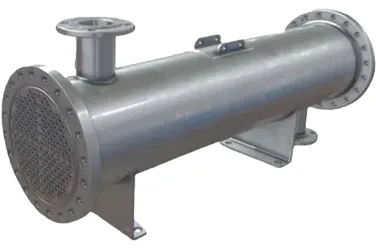
Shell & Tube Heat Exchangers are industrial heat transfer systems designed to transfer heat between two fluids without mixing them, using a bundle of tubes enclosed within a shell. They are widely used in process industries where temperature control directly impacts production stability and equipment safety.
Maharani Industrial Equipments Private Limited manufactures Shell & Tube Heat Exchangers in Delhi and supplies across India, supporting industries such as refineries, chemical plants, and power units. The company combines in house manufacturing of heat exchangers with spare parts supply, repair services, and reconditioning support
What is Shell & Tube Heat Exchangers
Shell & Tube Heat Exchangers are mechanical devices where one fluid flows through tubes while another fluid flows around those tubes within a shell, allowing heat transfer without direct contact. They are used in applications requiring reliable thermal exchange under varying pressure and temperature conditions.
In actual industrial use, these exchangers handle aggressive fluids, fluctuating loads, and long duty cycles. Their design allows easy maintenance, tube replacement, and cleaning. This makes them suitable for industries where scaling, fouling, or contamination is common and downtime needs to be controlled.
Applications in Real Industrial Use
In practical environments, Shell & Tube Heat Exchangers are installed in systems where temperature control is directly linked to operational safety and product quality.
Common scenarios include:
- Compressor cooling systems where oil and air temperature must be controlled
- Chemical reactors where heat removal prevents reaction instability
- Power plants where steam condensation affects turbine efficiency
- Oil and gas units where process fluids require controlled cooling
- Refrigeration systems supporting ammonia compressor operations
In many plants, a slight drop in heat exchange efficiency leads to overheating, triggering shutdowns or reducing production capacity.
Industries Using Shell & Tube Heat Exchangers
These heat exchangers are used in industries where process control is critical.
- Refinery and petrochemical plants managing high temperature fluids
- Chemical processing units requiring controlled reaction temperatures
- Power generation plants handling steam and cooling water systems
- Steel and metal industries where process heat must be dissipated
- Pharmaceutical units maintaining controlled production environments
- Food processing industries managing heating and cooling cycles
- Cement plants where compressor cooling and lubrication systems depend on stable temperatures
Each of these industries relies on consistent heat transfer to maintain operational balance.
Technical Considerations and Performance Factors
Performance of Shell & Tube Heat Exchangers depends on real operating conditions rather than theoretical design.
Key factors include:
- Fluid properties such as viscosity and fouling tendency
- Operating pressure and temperature ranges
- Flow rates and turbulence within tubes
- Material compatibility with process fluids
- Tube bundle design and surface area
- Scaling and fouling over time
In many cases, efficiency loss occurs due to fouling buildup rather than design limitations. This directly impacts cooling capacity and increases energy consumption.
Product Specifications Overview
Specifications are defined based on application requirements and system design.
Typical parameters include:
- Shell diameter and tube bundle configuration
- Tube material selection based on fluid compatibility
- Heat transfer area based on load calculation
- Design pressure and temperature limits
- Flow arrangement such as single pass or multi pass
For compressor related applications, these exchangers are often integrated with systems like
Reciprocating Air Compressors and
Oil Free Air Compressor setups to manage cooling requirements effectively.
How to Choose the Right Shell & Tube Heat Exchangers
Selecting the right Shell & Tube Heat Exchangers requires understanding actual plant conditions rather than relying on standard designs.
A correct selection ensures:
- Stable heat transfer across varying loads
- Reduced fouling and maintenance frequency
- Longer equipment life
- Consistent process temperature
Key considerations:
- Type of fluids and contamination levels
- Required heat transfer rate
- Space availability for installation
- Maintenance access for cleaning and tube replacement
- Future expansion or load increase
Many buyers face issues because exchangers are selected based on initial cost without evaluating long term operational impact.
Common Mistakes Buyers Make
Common issues observed in industrial setups:
- Undersizing heat exchangers leading to overheating
- Incorrect material selection causing corrosion
- Ignoring fouling factors during design
- Lack of access for maintenance and cleaning
- Choosing suppliers without repair support
These mistakes often result in repeated shutdowns and increased operational costs.
When This Product May Not Be Suitable
Shell & Tube Heat Exchangers may not be ideal in certain cases.
Situations include:
- Applications requiring compact and lightweight equipment
- Systems with very low heat transfer requirements
- Environments where maintenance access is highly restricted
- Processes requiring rapid temperature response in small spaces
In such cases, alternative heat exchanger types may be considered.
Installation, Maintenance and Service Support
Installation directly affects performance and longevity.
Key aspects:
- Proper alignment and support structure
- Correct piping connections to avoid flow imbalance
- Provision for venting and drainage
Maintenance requirements include:
- Periodic cleaning to remove fouling
- Tube inspection and replacement
- Leak detection and sealing
- Performance monitoring during operation
Maharani Industrial Equipments Private Limited provides installation support, repair services, and reconditioning including tube bundle replacement and complete exchanger refurbishment.
Spare Parts and Lifecycle Support
Heat exchangers require periodic component replacement to maintain efficiency.
Support includes:
- Tube bundle replacement and fabrication
- Gaskets, seals, and internal components
- In house manufacturing of intercoolers, aftercoolers, and oil coolers
- Integration support with compressor systems
This lifecycle approach ensures that exchangers remain functional even after years of operation.
Why Businesses Choose Maharani Industrial Equipments Private Limited
Buyers often move away from suppliers who only deliver equipment without long term support.
The difference lies in execution capability:
- In house manufacturing of heat exchangers and cooling components
- Strong service support for repair and reconditioning
- Spare parts availability for quick turnaround
- Experience handling real plant breakdown situations
- Pan India supply ensuring timely delivery
Commercial and Pricing Considerations
Pricing depends on multiple practical factors:
- Size and design of heat exchanger
- Material selection based on application
- Customization for specific process conditions
- Fabrication complexity
- Delivery timelines
Buyers should consider total operational cost rather than focusing only on initial procurement cost.
Common Buyer Concerns
Buyers typically evaluate:
- Will the exchanger handle actual process load
- How quickly maintenance or replacement can be done
- Availability of spare parts
- Compatibility with existing systems
- Long term durability under continuous operation
These concerns directly impact purchasing decisions.
FAQ
1. How do I know if Shell & Tube Heat Exchangers are suitable for my application
If your process involves high pressure, high temperature, or continuous heat transfer requirements, these exchangers are suitable. They are particularly effective in industries where durability and maintenance access are critical.
2. What happens if the heat exchanger is undersized
An undersized exchanger cannot dissipate required heat, leading to overheating, pressure buildup, and possible shutdown of connected systems such as compressors or reactors.
3. Can existing heat exchangers be repaired instead of replaced
Yes, many exchangers can be refurbished through tube replacement, cleaning, and sealing. This reduces cost and extends equipment life significantly.
4. Are spare parts available for older systems
Yes, components such as tube bundles and gaskets can be manufactured or supplied for older systems, ensuring continued operation without full replacement.
5. What causes heat exchanger efficiency loss
Common causes include fouling, scaling, corrosion, and improper flow distribution. Regular maintenance is required to maintain performance.
6. Do you provide urgent support during breakdown situations
Yes, urgent support is available including repair, spare parts supply, and replacement components to restore operations quickly.
7. Can these exchangers be integrated with compressor systems
Yes, they are widely used in compressor cooling applications and can be integrated with various systems for efficient heat management.
Get Shell & Tube Heat Exchangers for Your Business
If your plant is facing overheating issues, reduced cooling efficiency, or unexpected shutdowns, immediate support is essential.
Maharani Industrial Equipments Private Limited, based in Delhi and supplying across India, provides:
- Fast response for breakdown situations
- Quick dispatch with pan India logistics support
- Technical consultation for correct selection
- Spare parts availability and replacement support
- Repair and reconditioning services
For immediate assistance or enquiries Contact Us +91-9310745641 Today.
To Know more About Maharani Industrial Equipments Private visit About us page.
MATERIAL OF CONSTRUCTION
| Shell Material | MS,CS,SS |
| Tube Material | Copper, Cupronickel(70:30/90:10), SS304/316, MS, Brass (Seamless, External/Internal Grooved, Extruded, Spiral Wound Fin Tube) |
| Baffles | MS, CS, Brass, SS, PP |
| Shell side BSP | MS,CS,SS |
| Tube side BSP | MS,CS,SS |
| Tube OD | ¾” , ½” , 5/8” , 3/8” |